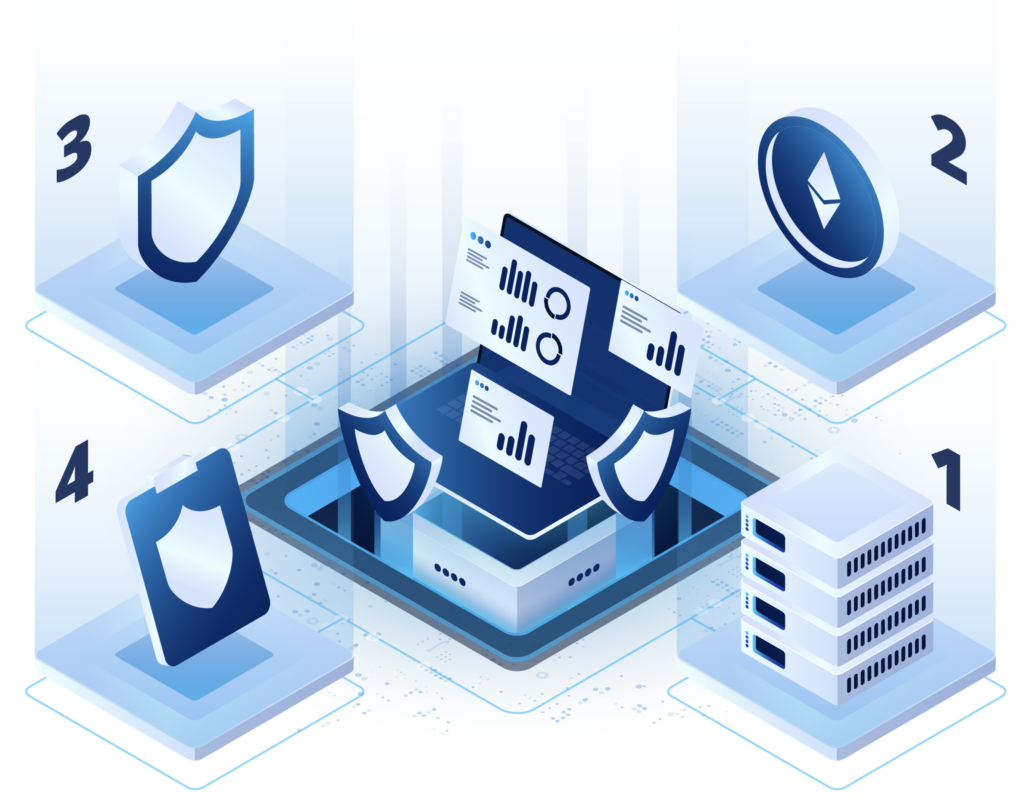


How you protect your most valuable asset, your data?
Traditional cybersecurity solutions attempt to protect the infrastructure, not the data. Certes Data Protection and Risk Mitigation (DPRM) is 100% data-focused, crypto-agile, quantum-safe, and has never been hacked.
The state-of-the-art DPRM solution acts as a formidable defense against the rising threats of data breaches and ransomware attacks, ensuring a solid foundation for your digital assets.
Click here to visit the Certes website and learn more about protecting your valuable data.
Certes' Solutions
The FIPS 140-2 and Common Criteria EAL4+ certified Certes Enforcement Points (CEPs) are multi-layer encryption appliances that provide data protection and application segmentation. Delivering security products that have been tested and validated against these rigorous standards is critical to help organizations and government agencies comply with data protection regulations.
These CEPs integrate easily into any existing network and operate transparently within the infrastructure, ensuring all data is encrypted without impacting network performance.
The CEPs are interoperable with the key management software, CryptoFlow® Net Creator, and are easy to install, scalable for any size infrastructure, and simple to manage. With dedicated CEP appliances, customers experience high encryption throughput without performance impact.
With simplicity and flexibility, CEPs support encryption at any network layer, providing security management and protection for Layer 2, Layer 3, and Layer 4 networks.
CryptoFlow® Net Creator (CFNC) is a centralized key management system that provides full control of your security posture. With a user-friendly GUI and drag-and-drop tools, policies can be defined and deployed easily from a single control point.
CFNC is both FIPS 140-2 and Common Criteria EAL4+ certified.
CFNC centralizes and automates control of keys and policies at an enterprise scale. It enables key generation to protect the entire network infrastructure, including crypto-segmentation, which reduces implicit trust by securely separating data flows between applications and workloads. Additionally, key rotations can be scheduled automatically, eliminating the need for manual oversight.